
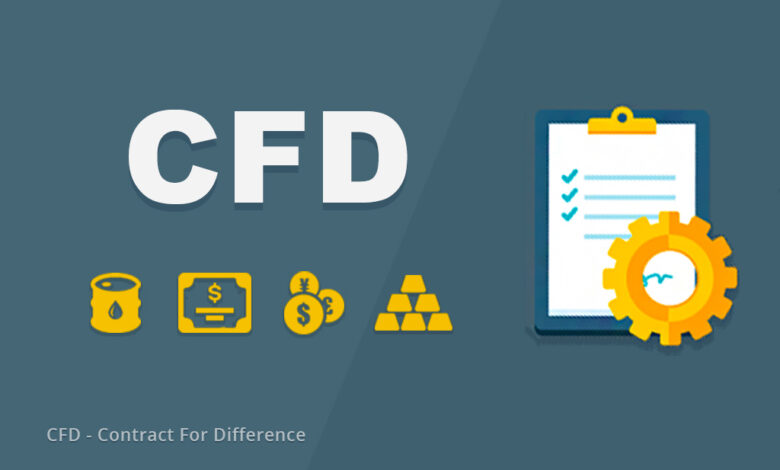
CFD stands for Contract for Difference.
In forex, a CFD is a financial contract between a trader and a broker where you speculate on the price movement of an asset without actually owning the underlying asset.
Instead of buying physical currencies, stocks, gold, or oil, you simply trade on whether their price will go up or down.
How Does a CFD Work?
When you trade a CFD, you’re agreeing with the broker to exchange the difference between:
- The price when you open the trade.
- The price when you close the trade.
If the market moves in your favor, you make a profit.
If it moves against you, you incur a loss.
Example 1: Forex CFD
Suppose EUR/USD is trading at 1.1000.
You believe the euro will strengthen, so you buy.
- Entry Price: 1.1000
- Exit Price: 1.1050
The price increased by 50 pips, so you earn a profit based on your trade size.
You never owned euros—you simply profited from the price difference.
Example 2: Gold CFD
Gold is trading at $3,300.
You think the price will fall, so you sell.
- Sell: $3,300
- Buy Back: $3,260
Since gold dropped by $40, you make a profit from the difference.
Again, you never owned physical gold.
What Can You Trade as CFDs?
Most CFD brokers allow you to trade:
- Forex currency pairs
- Gold and silver
- Oil
- Stock indices (NASDAQ, S&P 500, Dow Jones)
- Individual stocks
- Cryptocurrencies
- Commodities
Advantages of CFD Trading
- Go long or short: You can profit from both rising and falling markets.
- Leverage: Control larger positions with a smaller amount of capital.
- Access to many markets: Trade multiple asset classes from one account.
- No ownership required: You don’t need to buy or store the underlying asset.
Risks of CFDs
CFD trading also comes with significant risks:
- Leverage magnifies losses as well as profits.
- Markets can move quickly, especially during major news events.
- You may incur overnight financing (swap) charges for positions held overnight.
- Poor risk management can lead to rapid losses.
CFD vs Owning the Asset
| CFD Trading | Owning the Asset |
|---|---|
| You don’t own the asset | You own the asset |
| Profit from price changes | Profit from price changes and ownership |
| Can buy or sell easily | Usually buy first, then sell later |
| Uses leverage | Often requires paying the full value |
| Common in forex and derivatives | Common for physical assets and traditional investing |
Are Forex Trades CFDs?
With most retail forex brokers, yes.
When you trade currency pairs such as:
- EUR/USD
- GBP/USD
- USD/JPY
- XAU/USD (Gold)
You’re typically trading them as CFDs, meaning you’re speculating on their price movements rather than exchanging the actual currencies.
A CFD (Contract for Difference) is a trading instrument that allows you to speculate on whether the price of an asset will rise or fall without owning the asset itself. It’s widely used in forex because it provides access to global markets with leverage and the ability to profit in both bullish and bearish conditions.
While CFDs offer flexibility and opportunities, they also carry substantial risk, so using stop-loss orders and proper risk management is essential.